My point is that you don’t know what you don’t know, so how can you possibly ask for training on topics, workflows and procedures that you may not even know exist?

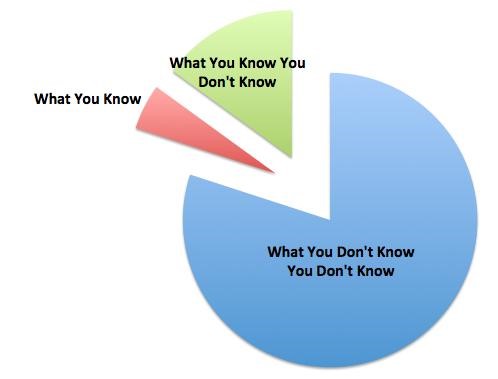
I think the graphic says it all really, and OK, I don't know how accurate it is, but in my experience, it’s pretty close to the truth. The amount of people that we train comment on all the "new features" that we have shown them, what they don't know is that about 90% of those new features are actually old features.
Think about it like this, you are sitting at work doing
a task that you have done thousands of times.
Could there be a better way of doing it?
Who do you ask if there is a better way, normally it will be the person sitting next to you. In a lot of companies, the person sitting next to you may well be the person who showed you how to do it in the first place. So, what's next? Google, it probably is, and yes search engines are a lot more advanced than they used to be, but they are not that good to be able to create an answer from a particular task for you (although in a few years they probably will be able to!)
So where are we at now? We have exhausted all the expert advice we can get to from our desks, so where else can we go? Ask the experts I say, speak to people who do this as a profession.
"How do you ask for training in something
that you don’t know exists?"
I have spent twenty years of my life improving how people work with their design software, and I am only one of hundreds of people at Symetri with experience in so many disciplines that I literally have lost count, but whatever you do I am 100% sure that someone could help you improve the way in which you do it.
You could call our support, we support thousands of clients using hundreds of different software, we have been there and got the T-Shirt, let us show you.
However, the best way to do this, so that it sinks in and stays in your overloaded brain is to get some training, but again I ask you the question how do you ask for training in something that you don’t know exists. Simple, the answer is a Training Needs Analysis (TNA). With a Training Needs Analysis, we perform interviews with all the relevant staff, we find out what you do, and how you do it. We can then suggest a training programme that will address all your problems.
You will get a detailed report of the current situation within your organisation, a graphical representation of the companies or departments current knowledge level, we then detail what every employee will need to take them to the next level. We even give an ROI figure.
Imagine this as a Team Leader or Department Manager, you get a rush job in, you find your "Go-to person" and assign them the job, you know that he or she is the one person in your department that can do the job quickly and accurately. How great would it be if your whole department was at the same level, and you could literally give the job to anyone?
The only way that is ever going to happen is if you train all the people in the right way, using workflows that suit you, designed and delivered by product professionals.
See our courses in each country here.